


Memory rarely comes whole; it arrives in shards—sharp edges of feeling, fragments of a room, a line of song that suddenly feels like a whole life. What happens if you don’t try to smooth them, but let them sit, jagged and honest, for a while?
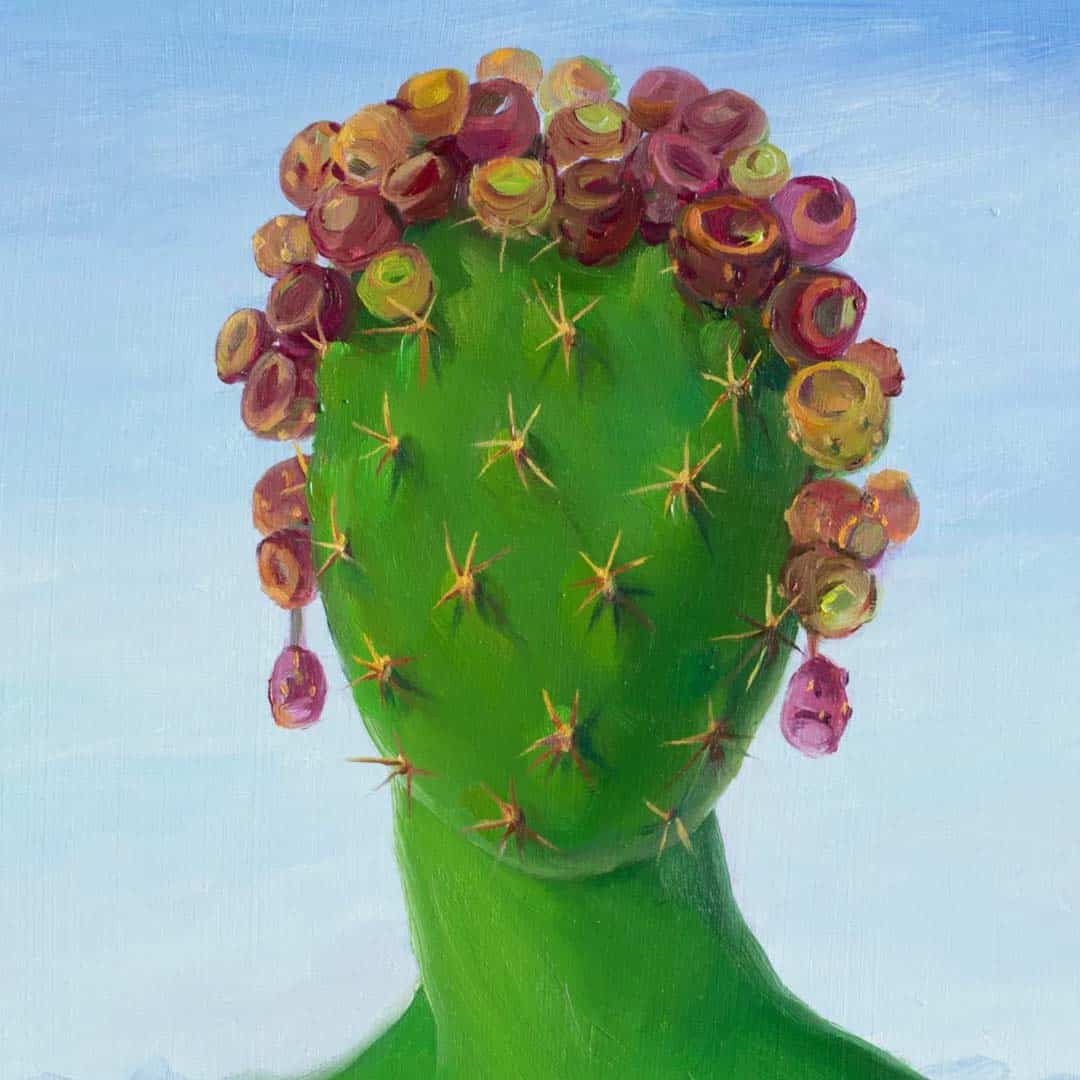
Shards Personified
Charlene Lim (Admin Executive)
Shards are often defined as sharp, broken fragments, objects associated with danger and harm. Yet I cannot help but see them not for their capacity to wound, but for what they reveal.
We handle shards with care because of their sharpness, approaching them cautiously, wary of the damage they might cause. But what if care were extended beyond caution to acknowledge their fragility and history? Rather than focusing on their fractures, we might see their jagged edges as scars. Their sharpness may remain as a form of protection. It is testimonies to the experiences that shaped them, records of impact and endurance etched into their form.
Perhaps memory shards extend their personality onto the person who carries them. We are often quick to view those marked by pain as broken, dangerous, or in need of repair. Yet what if we approach them with greater care of something hurt? Not to dull them or smooth them away, but to honour the tenacity that formed them
Cactus portrait, oil on panel, 10″x8″, 2021
Jingyi, Wang
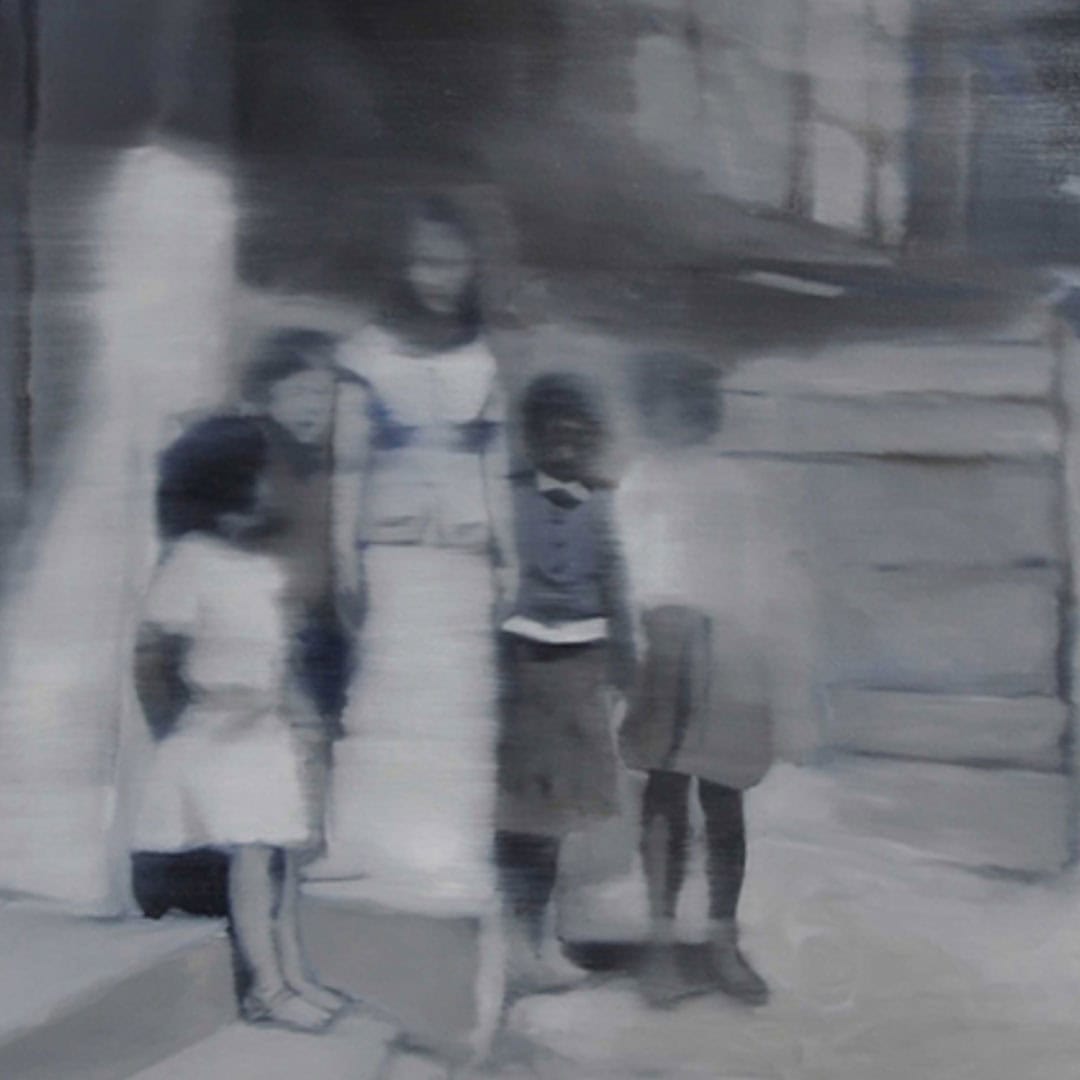
A Broken Facade
Shri Meenakshi Dhanashekar (Marketing and Communications Intern)
A memory can begin with almost nothing. A feeling without a face, a room you can’t quite place. Just an entire feeling that runs through your body and mind before the story even does. A familiar song plays and I am suddenly, somewhere else entirely. Memory holds on to emotions and lets the details blur away. The pieces that remain are almost never neat, far from organised chronological thoughts, they are utter chaos. They are not tidy but they tend to carry complete honesty. The moments overlap, but the feelings never fade.
Only once I truly stop to think, I understand the depth of each emotion and when I stop trying to organise my thoughts, I see the weight that they carry. They remind me of a version of myself, or multiple versions of myself that used to walk different paths. We tend to soften difficult moments from the past but once we stop trying to fix what cannot be fixed, we can realise how certain things played a major role in shaping us.
German-Vietnamese artist Nam Chau focuses on memory and heritage in her misty paintings of places she’s never actually been. Each piece takes on the look of an aged photograph that’s being recreated in the mind’s eye, while the lack of facial features adds to the mystery and intrigue.
Image source: https://designcrushblog.com/2017/10/25/nam-chau/
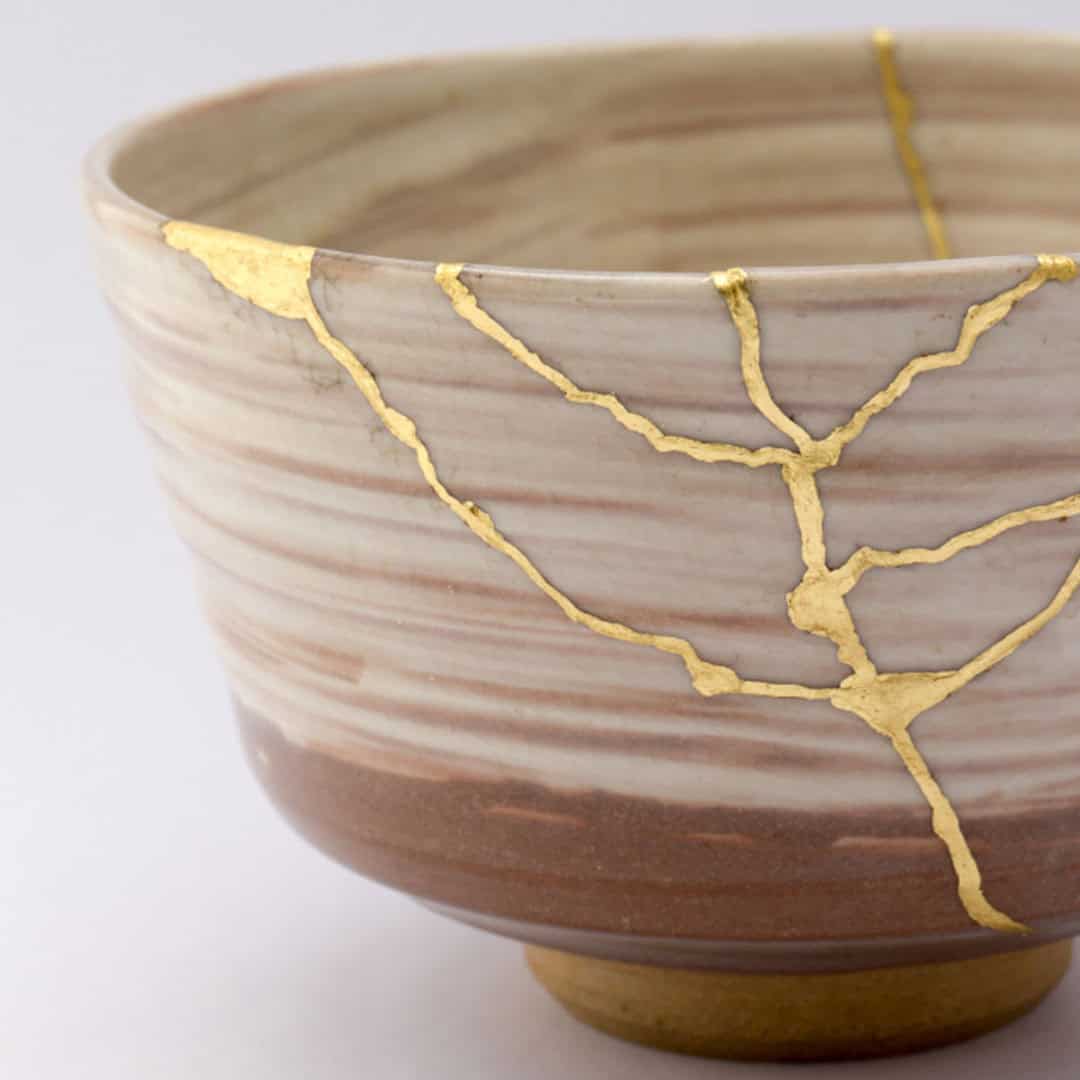
Defining Lines
Audrey Desmond (Marketing Lead)
There is a Japanese art called kintsugi, where broken pottery is mended with gold lacquer. The philosophy behind it is beautiful: the piece isn’t ruined because it broke; it is actually more valuable and unique because of its fractures.
You don’t need a perfect, unbroken history to be whole. Having lived through those times, we have already savoured the moments themselves, and these fractured memories can simply be seen as the golden imprints left upon our lives.
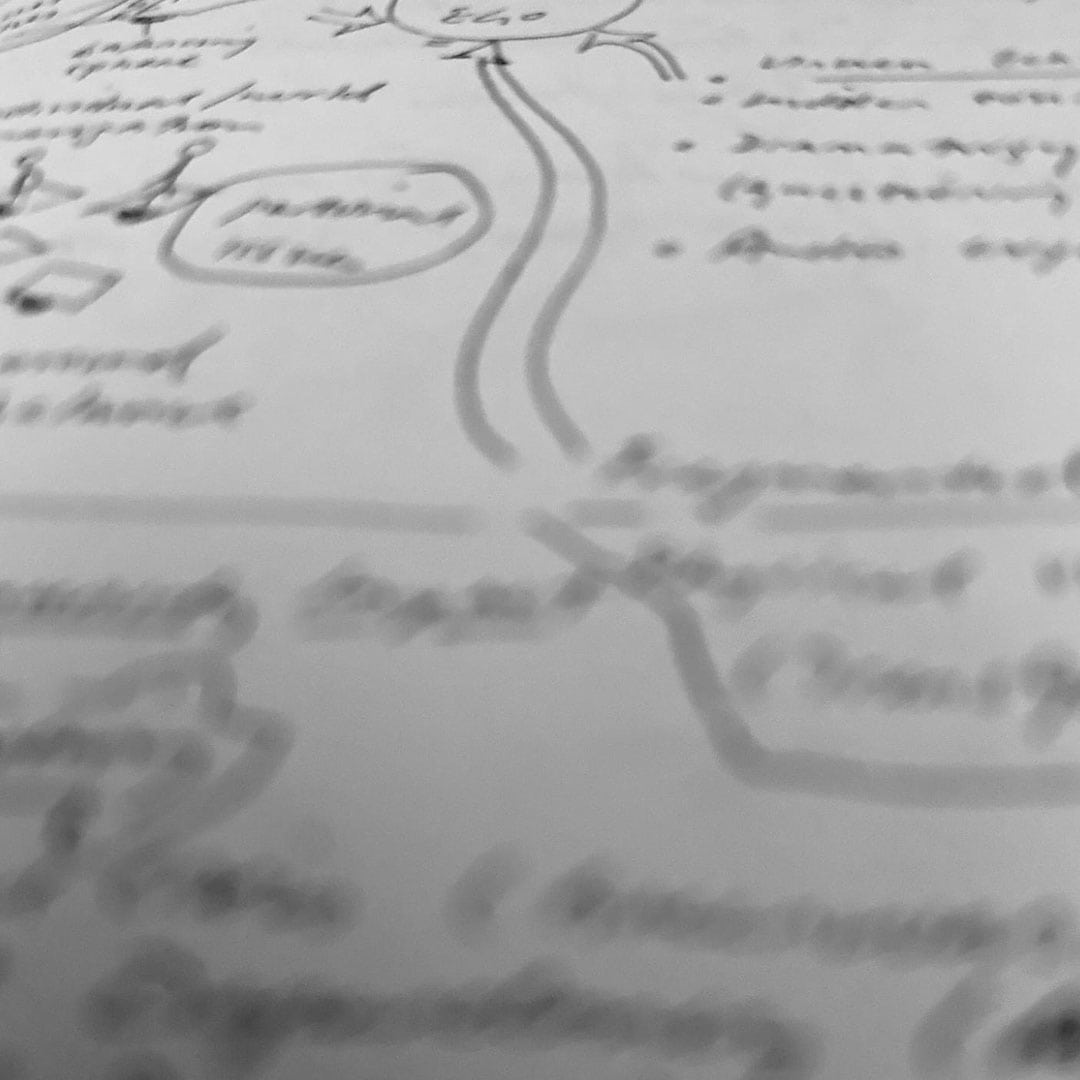
Folded memories
Ricky Sim (Artistic Director)
I moved house recently and while going through old boxes, I found a rehearsal note I had not seen in years.
It was folded between other papers, almost too easy to miss. But when I opened it, I felt myself return to that time — not just the rehearsal room, but everything around it. The long days. The conversations after practice. The uncertainty of making work without knowing where it would lead. The friendships that felt so present then.
Funny how one small piece of paper can hold so many different rooms at once. It reminded me of the person I was then and the life happening around the work. The waiting, the hoping, the mistakes, the small moments we only understand much later. Maybe we all have something like this. An ordinary thing that brings back a whole season of ourselves.
Photo: Ricky
Dance of the machine
Matthew Goh (Company Dancer)
Artificial Intelligence can generate quirky and weird content that sometimes disrupts conventional norms and stereotypes. But how far can the unconventional be pushed before we perceive it as strange or awful? As we watch this ‘ballet,’ could we ponder whether this is still the classical form we know, or maybe it is the avant-garde counterpart—contemporary dance—or if it is even dance?
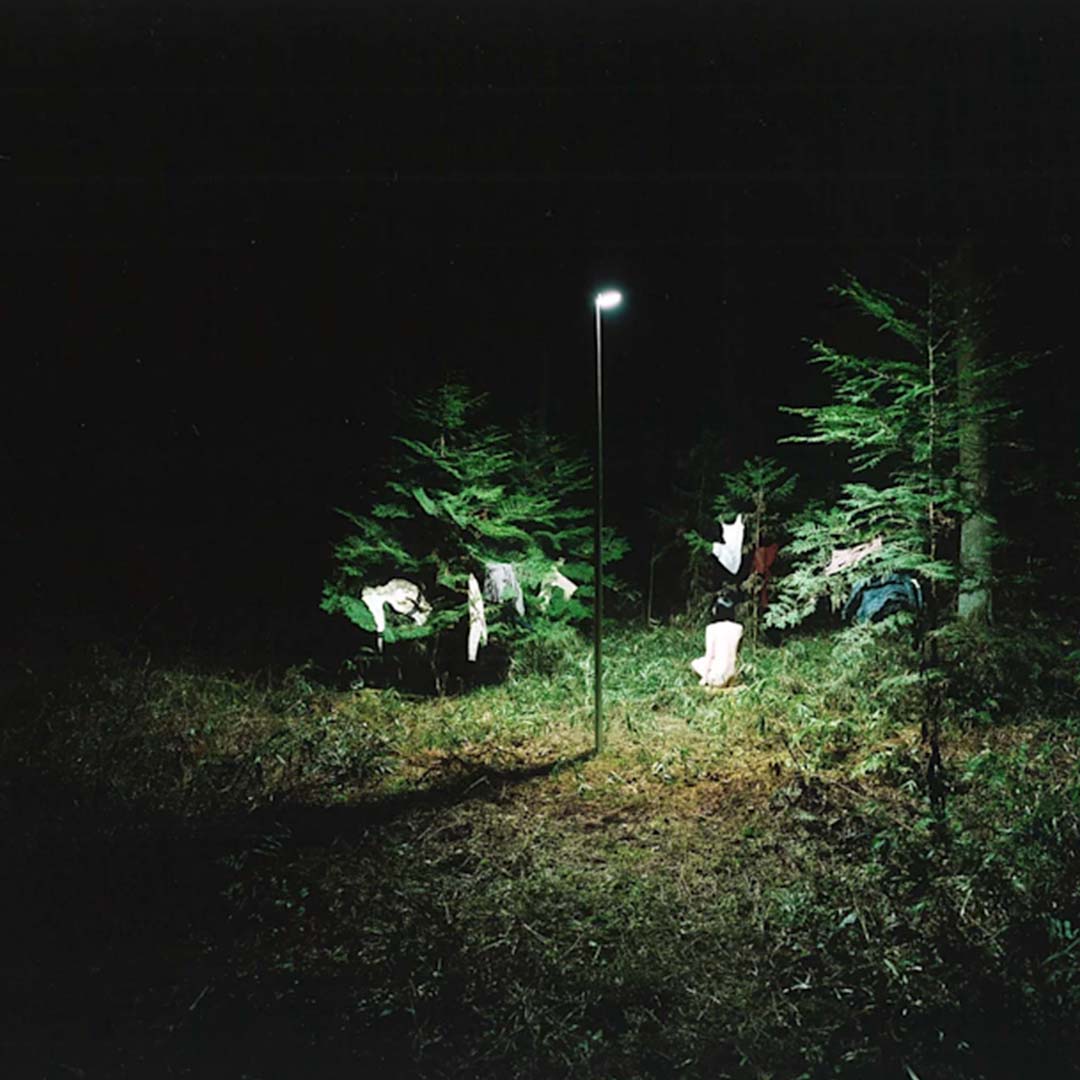
Faint Lines, Lingering Light
Esther Ong (Company Manager)
What remains is not the path itself, but the feeling of it. A subtle shift in how space might be entered, how attention might be held. Long after it is gone, the impression persists, soft, unresolved and difficult to name.
This is how Hideo Kobayashi’s photographic works linger in my memory. The light in his work does not follow a predictable path. It bends and drifts around what it meets. Watching it, the world feels slightly altered, as if the space itself remembers the line that once passed through. It leaves no fixed route, yet it edges quietly into perception, shaping how we move, notice and hold a moment in mind.
I notice my own traces in the spaces I pass through: the glow that lingers on pavement after a streetlight flickers off in my neighbourhood, the brief reflection along a windowpane, the way sunlight shifts quietly across a clearing. These fleeting marks may never form a road, yet they linger in subtle ways, shaping the landscapes around me and the moments I touch without knowing.
“Interrupted Place/trace” Emon Photo Gallery, Tokyo Filming “Streetlight”

Transforming Disruption
Ricky Sim (Artistic Director)
A major disagreement, a change in priorities, or even a life event can throw a relationship off balance. It’s never easy. But I’ve come to see that disruption, as painful as it is, often leads to growth. These moments force us to face what we’ve been avoiding—our insecurities, needs, or unresolved issues. I’ve found that disruption can spark deeper conversations and bring about real change. In the end, it often makes the connection more honest and meaningful.